
Cabinetry Articles & Guides
Understand cost breakdowns, how to choose the perfect bathroom vanity, the latest kitchen trends and more.
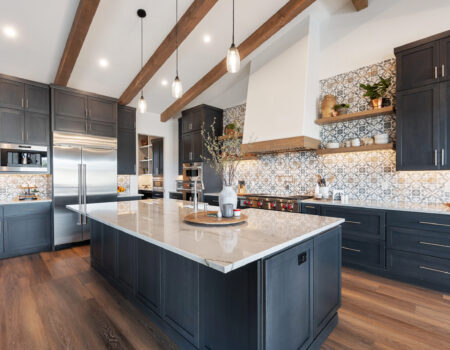
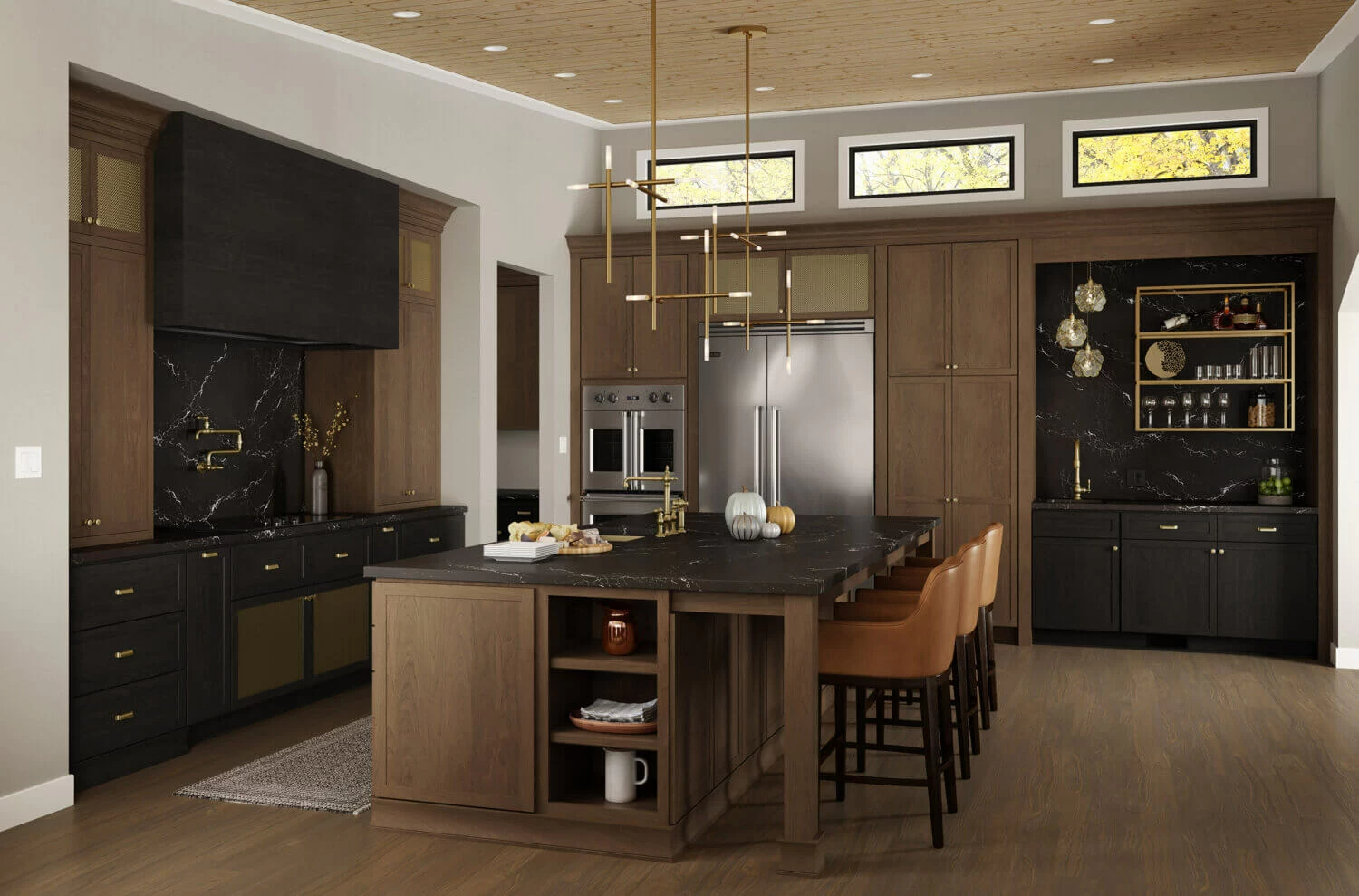
Photo: Dura Supreme
Inset vs. Overlay Cabinets: What’s the Real Difference?
If you’ve begun researching cabinets for your kitchen or bathroom remodel, you’ve probably come across the terms inset and overlay cabinets. But what do those terms actually mean — and how do they impact durability, style, cost, and long-term satisfaction?
In this article, we’ll break down the real differences between inset and overlay cabinets so you can confidently choose what’s right for your home, style, budget, and timeline.
What Are Inset and Overlay Cabinets?
Before we compare, let’s define the terms:
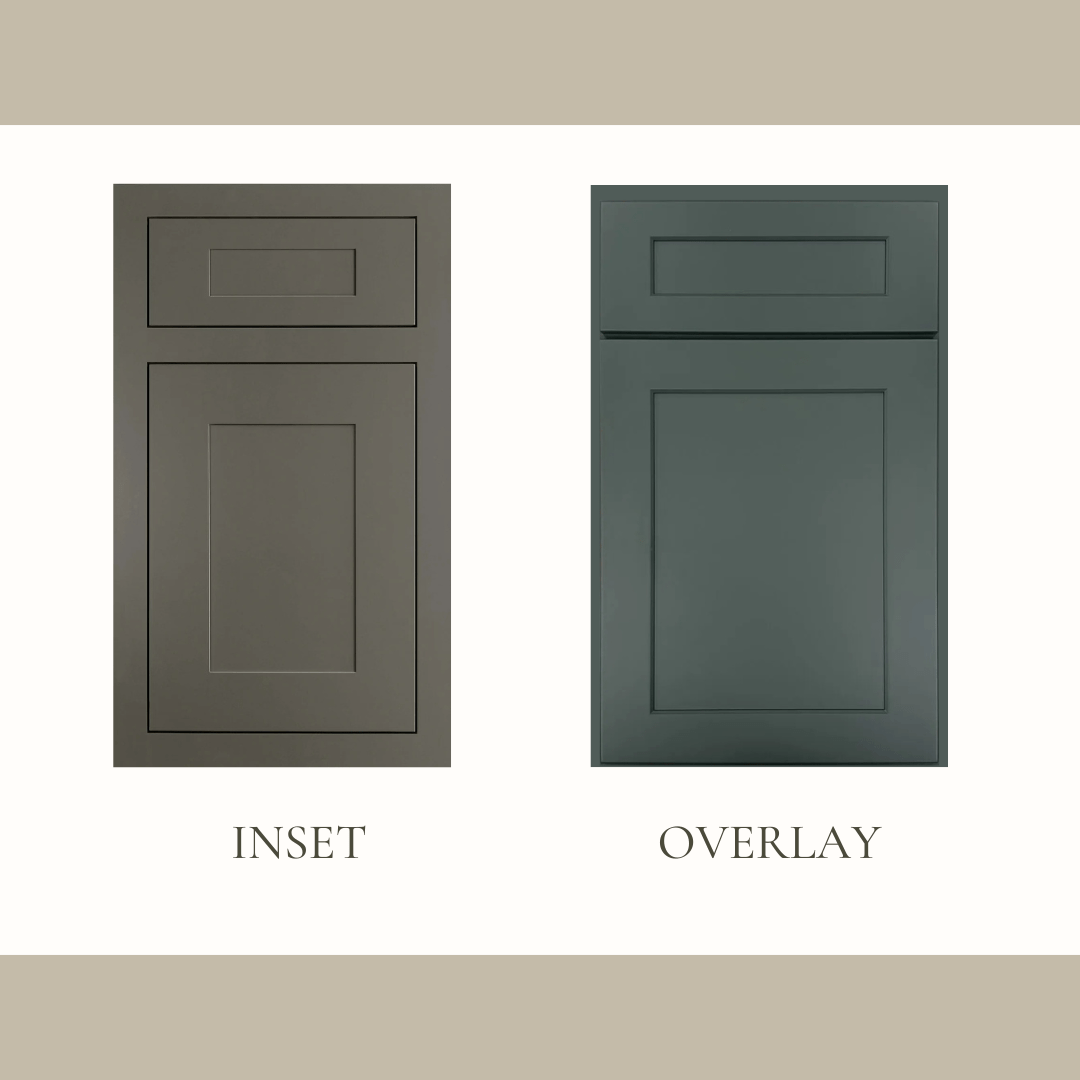
Inset Cabinets - Doors and drawer fronts are set inside the cabinet frame, so they sit flush and align perfectly with the face frame.
Overlay Cabinets - Doors and drawers sit on top of the cabinet frame, covering most (or all) of the frame. Overlay styles are usually described as partial, full, or even super-full overlay depending on how much of the frame is covered.
These differences might seem subtle, but they have a big impact on style, function, and cost.
Style & Aesthetic: Classic vs. Flexible
Inset Cabinets
Inset cabinets have a timeless, furniture-like look. They evoke craftsmanship and quality you might see in traditional or high-end kitchen designs.
Look and feel:
- Clean, symmetrical lines
- Classic and refined
- Often associated with heritage or traditional styles
Inset cabinets tend to be a favorite for:
- Historic homes
- Classic and transitional designs
- Homeowners who prioritize artisan detail
Overlay Cabinets
Overlay cabinets offer flexibility in design because they come in different overlay options:
- Partial Overlay — More visible frame
- Full Overlay — Minimal frame visibility
- Super Full Overlay — Almost no visible frame
Look and feel:
- Modern and sleek (especially full overlay)
- Works with contemporary to farmhouse styles
- Most common in today’s remodels
If your design leans more modern, eclectic, or you want clean, simple lines, overlay doors may suit you best.
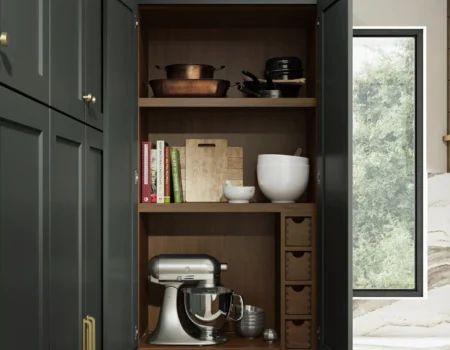
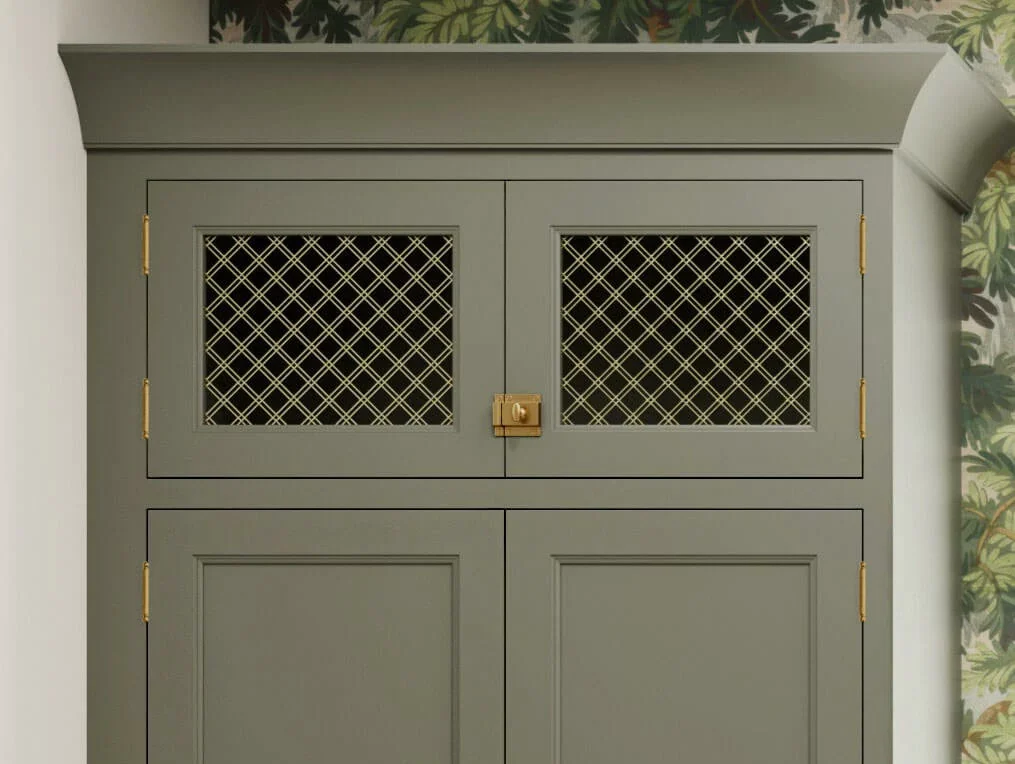
Photo: Dura Supreme featuring inset cabinet styles
Durability & Functionality: Which Holds Up Better?
Inset Cabinets
Because the doors sit inside a frame and fit so precisely:
- They require very tight tolerances during manufacturing and installation.
- The hinges and hardware are often more robust.
- They wear well over time — especially in wood that may expand and contract.
However, the precise fit also means:
- More potential for sticking doors if the wood shifts
- Greater sensitivity to humidity and house settling
- Inset cabinets often use high-quality materials and hardware — which contributes to long-term performance.
Overlay Cabinets
Overlay doors are usually:
- Easier to open and close (more forgiving clearances)
- Less affected by minor shifts or humidity
- Simpler to adjust after installation
Overlay cabinets can certainly be durable, especially with good hardware — but the durability differences are less about the style and more about materials and construction quality.
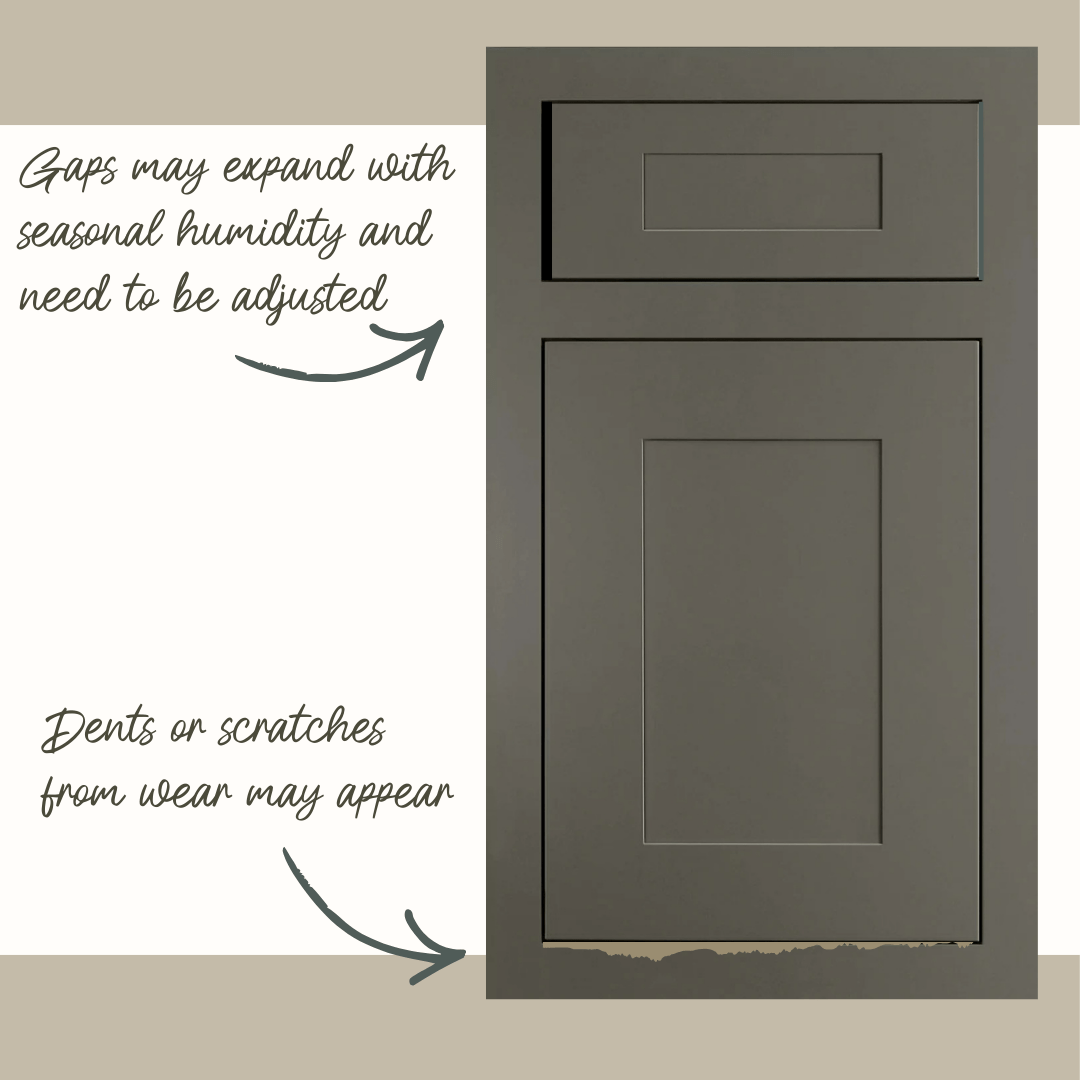
Example of Common Concerns with Inset Cabinets
- Greater sensitivity to humidity and house settling means tolerances may become uneven, and gaps may form around the edges that require seasonal adjustments
- A heavy pot or pan pulled out of the cabinet may dent the face frame of the cabinet and be visible with inset doors
Price Considerations: What Costs More?
Generally:
Inset cabinets cost more than overlay cabinets.
Here’s why:
- Precision manufacturing: Inset doors must be built with exact tolerances.
- Higher-end hardware: Premium hinges and soft-close mechanisms are common.
- Detailed installation: Inset doors take more time to install and align.
Overlay cabinets — especially partial overlay — are typically more budget-friendly because:
- Manufacturing tolerances are less strict
- Installation is more straightforward
- Hardware requirements can be simpler
Here’s a rule of thumb:
- Partial overlay: most affordable
- Full overlay: mid-range
- Inset: premium price point
However, materials (solid wood vs. MDF/veneer) and finish quality often impact cost more than the style itself.
Regional Trends: What Are People Choosing Where You Live?
Cabinet style trends vary regionally. In many parts of the U.S.:
Northeast & Mid-Atlantic: Classic and transitional designs are popular, so inset styles show up more in custom projects.
West Coast & Southeast: Sleek, modern styles dominate, making full overlay doors a common choice.
High-end remodels nationwide: Inset continues to be popular for upscale kitchens due to its furniture-like appeal.
Regional preferences can shift over time, but understanding trends helps you choose a style that feels right for your market and resale expectations.
Which Should You Choose?
Here’s how to decide:
Choose Inset if:
- You want a classic, timeless look
- You prioritize craftsmanship and detail
- Budget is flexible
- You’re remodeling a traditional or historic home
Choose Overlay if:
- You want design flexibility
- Your style is modern, transitional, or eclectic
- You’re balancing budget and aesthetic
- You want simpler adjustments after installation
There’s no universal “better” choice — only the one that fits your design goals, budget, and lifestyle.
Final Thoughts: It’s About Quality, Not Just Style
Both inset and overlay cabinets can be beautiful and long-lasting — but the real driver of performance is quality:
- Material selection
- Construction method
- Hardware quality
- Installation precision
A cabinet professional will help you evaluate these factors (not just the style labels) so you get results you love for years.
to the Design Studio
Schedule a discovery call with our design team and see if we’re the right fit to bring your cabinetry vision to life.
During your visit to our design offices, you’ll get hands-on with materials, explore styles, and talk through your ideas with our cabinetry experts. Located in Mt. Juliet, TN.