Cabinetry Articles & Guides
Understand cost breakdowns, how to choose the perfect bathroom vanity, the latest kitchen trends and more.
Common Cabinet Materials That Don’t Hold Up Over Time
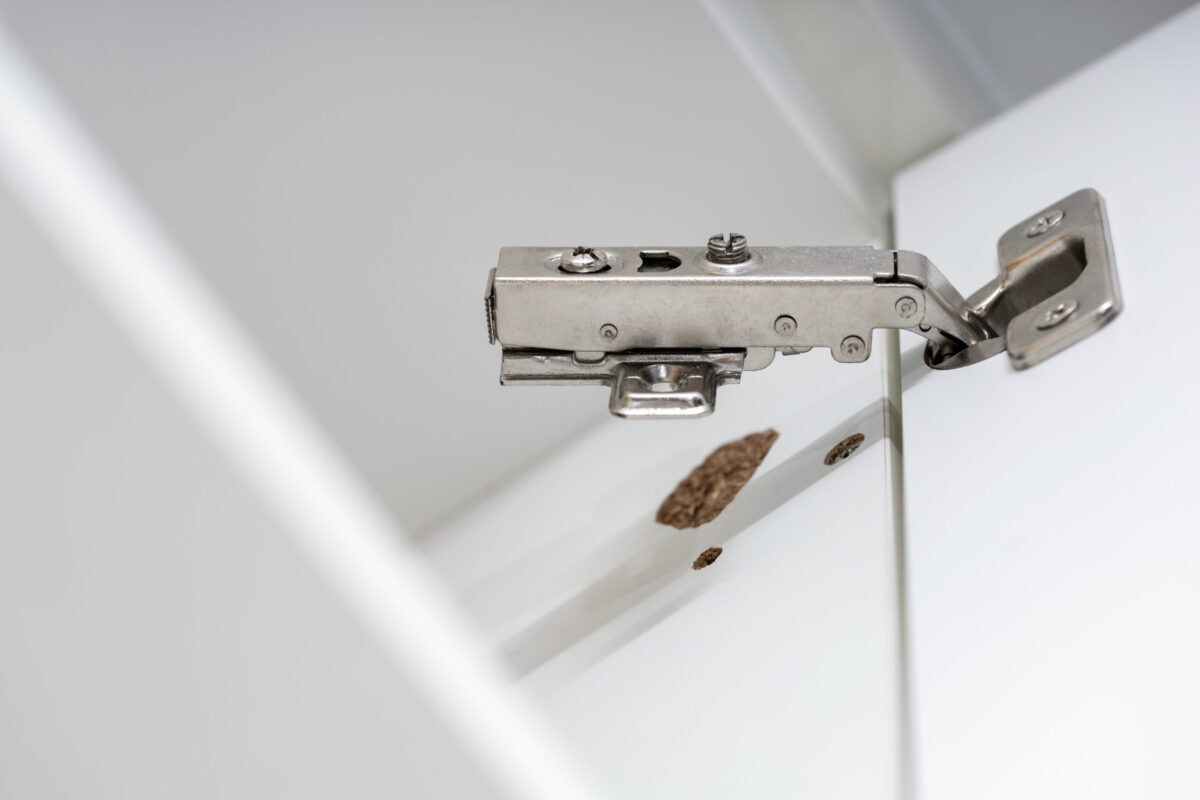
Particleboard Cabinets
Why They Don’t Hold Up:
- Made from wood chips, glue, and resin, particleboard is weak and prone to sagging under weight.
- Sensitive to moisture—edges can swell and wood veneers can peel when applied to particleboard.
- Screws and hinges often loosen over time, causing cabinet doors to wobble.
Better Alternative:
- Plywood cabinet boxes are more durable and resist warping.
MDF (Medium-Density Fiberboard) Cabinet Boxes and End Panels
Why They Don’t Hold Up:
- MDF is denser than particleboard but absorbs water easily, which can lead to swelling.
- MDF can chip or crack if kicked.
Better Alternative:
- Plywood cabinet boxes and end panels are more impact resistant.
Laminate Cabinets on Low Quality Base Materials
Why They Don’t Hold Up:
- Low-cost laminates glued to particleboard often delaminate at edges over time, often in a very short period of time.
- Heat and moisture from kitchens can cause bubbling and peeling.
Better Alternative:
- High-pressure laminate (HPL) on plywood or solid wood doors with veneer.
Cabinets Finished on Site (With Non-Specialized Products)
Even the highest-quality cabinet materials can fail prematurely if finished poorly. Many homeowners try to save money by using paints or finishes from big-box stores on custom cabinetry. While these products may look fine initially, they are often less durable, prone to chipping, fading, or yellowing over time, and require frequent touch-ups. The better alternative is factory-applied, industrial-grade finishes, baked onto the cabinets at the manufacturing facility using specialty coatings only available from professional suppliers. These finishes create a hard, long-lasting surface that resists scratches, heat, and moisture, ensuring that your custom cabinets retain their beauty and functionality for decades.
Cheap or Off-Brand Drawer Slides
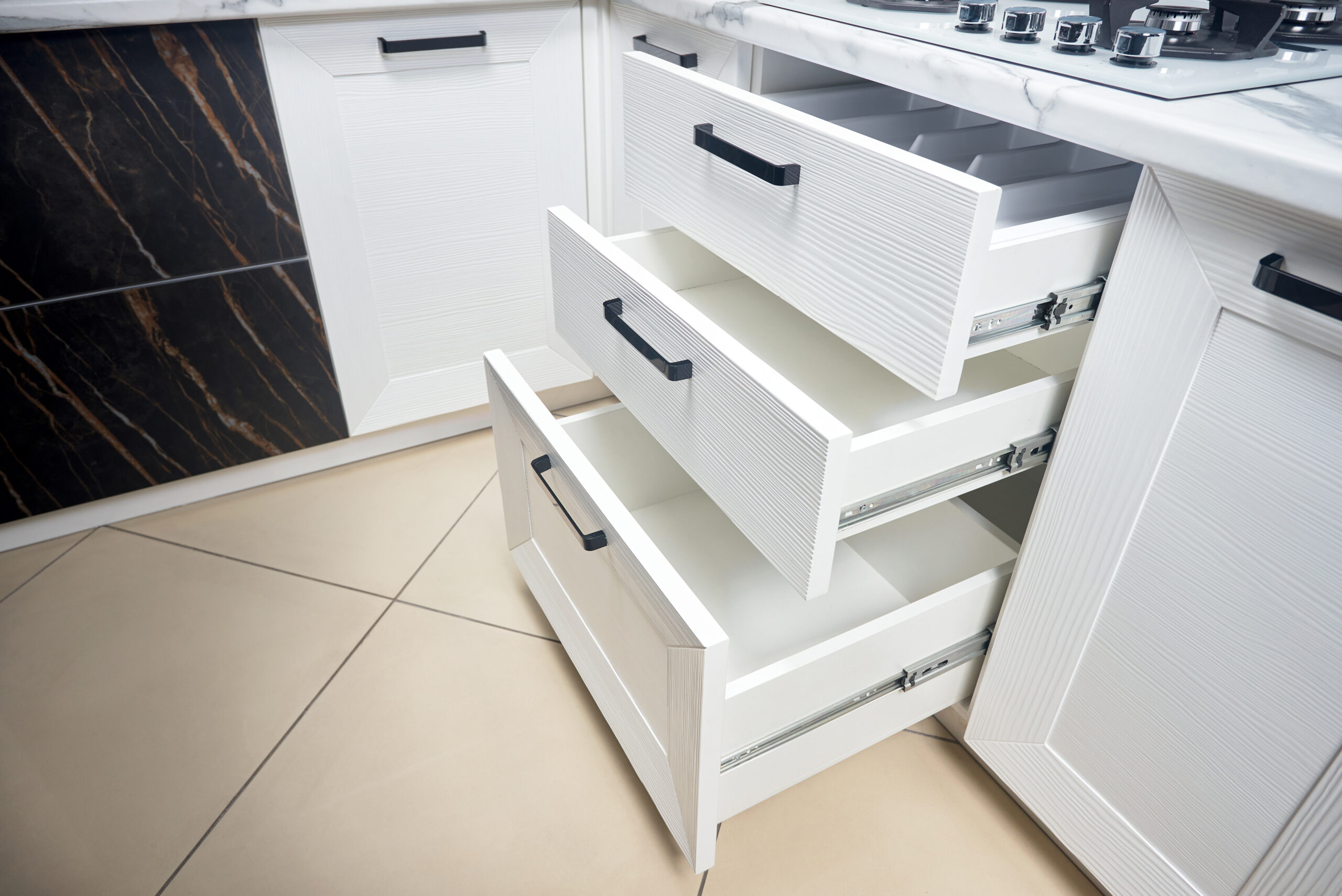
Another factor that affects cabinet longevity is the quality and type of drawer slides. Many low-cost or off-brand cabinets use side-mounted slides instead of full-extension undermount slides. While side-mounted slides may seem functional at first, they often wear out faster, cause drawers to sag, and limit smooth operation, especially under heavy use. In contrast, high-quality undermount or soft-close slides distribute weight more evenly, last longer, and provide a smoother, quieter drawer experience—making them a worthwhile investment for any custom or semi-custom cabinet project.
Signs You're Using Cabinets That Won't Last
Watch out for these early warning signs:
- Sagging shelves or drawers
- Delamination of edges or surfaces
- Cracks in paint or veneer
- Warping near sinks or stoves
- Loose hinges or hardware
If you notice any of these, it may be time to consider a cabinet material upgrade.
How to Choose Durable Cabinets
- Check the Core Material: Plywood is generally stronger than particleboard or MDF.
- Ask About Moisture Resistance: Especially important for kitchens and bathrooms.
- Inspect the Finish: Solid wood, high-quality veneers, or laminates last longer than thin veneers.
- Consider the Hardware: Good hinges and drawer slides improve longevity.
- Factor in Maintenance: Some materials like solid wood need occasional refinishing but last decades.
FAQ: Cabinet Materials That Don't Hold Up
Q1: Are particleboard cabinets bad for kitchens?
Yes, particleboard is weak and moisture-sensitive, making it unsuitable for high-use kitchens.
Q2: Is MDF durable for cabinet doors?
MDF is fine for dry areas, but standard MDF can swell in humid environments. Use moisture-resistant MDF or plywood for kitchens and bathrooms.
Q3: Why do veneers peel off cabinets?
Thin veneers over weak substrates like particleboard are prone to peeling from heat, humidity, or everyday wear.
Q4: What materials should I choose for long-lasting cabinets?
Plywood, solid wood, or high-quality MDF/veneers with proper finishes provide durability and longevity.
Expert Recommendations: Invest in Cabinets That Last
Investing in the right cabinet materials is one of the best ways to ensure your kitchen or bathroom lasts for decades. Avoid particleboard, low-quality MDF, cheap veneers, and pressed wood in high-use areas. Choosing plywood, solid wood, or high-quality finishes may cost more upfront, but it prevents costly repairs and replacements in the future.
Pro Tip: If your budget is tight, consider mixing materials—use durable materials where it counts (like cabinet boxes) and lower-cost options for decorative areas.
to the Design Studio
Ready to invest in cabinets that actually last? Let’s design a kitchen built with materials that stand the test of time—not just the trends. Schedule your consultation today.